CUREATR · MEDICATION ADHERENCE · 2021–2023
Resolving medication barriers so patients actually get their refills.
Health plans sent Cureatr daily lists of members who weren’t taking their medications, usually because of cost, access or confusion about coverage. I designed the workflow our clinical pharmacists used to find the real barrier, resolve it, and prove it worked.
- Role
- Product designer
- Users
- Internal team of clinical pharmacists
- Research
- User interviews and shadowing sessions
- Timeline
- Cureatr, 2021–2023
- Outcome
- 25% lift in drug plan satisfaction
01
A list of names, and no way to close the loop
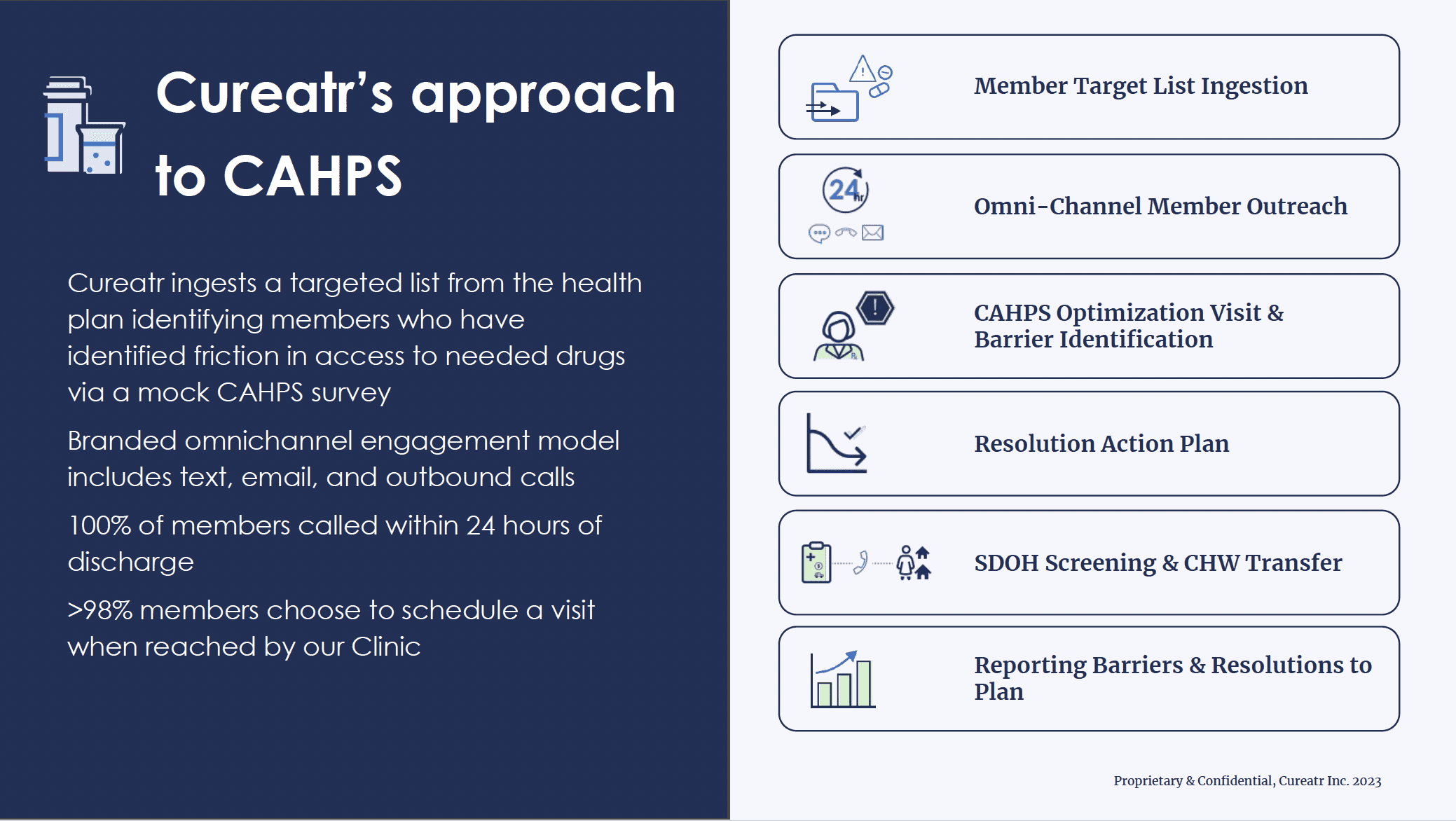
Cureatr worked with health plans to close care gaps as patients moved between care settings. One gap kept recurring: members who weren’t taking their medications because they couldn’t get them or couldn’t afford them. Payers such as Humana sent daily lists of these members, and the root causes were usually social: transportation, cost, confusion about what their plan covered.
Medication adherence feeds directly into a plan’s Star Ratings, so every unresolved barrier had a cost the plan could see. The goal was a workflow that let pharmacists identify, document and resolve each barrier, consistently enough to measure.
02
What the front line was working with
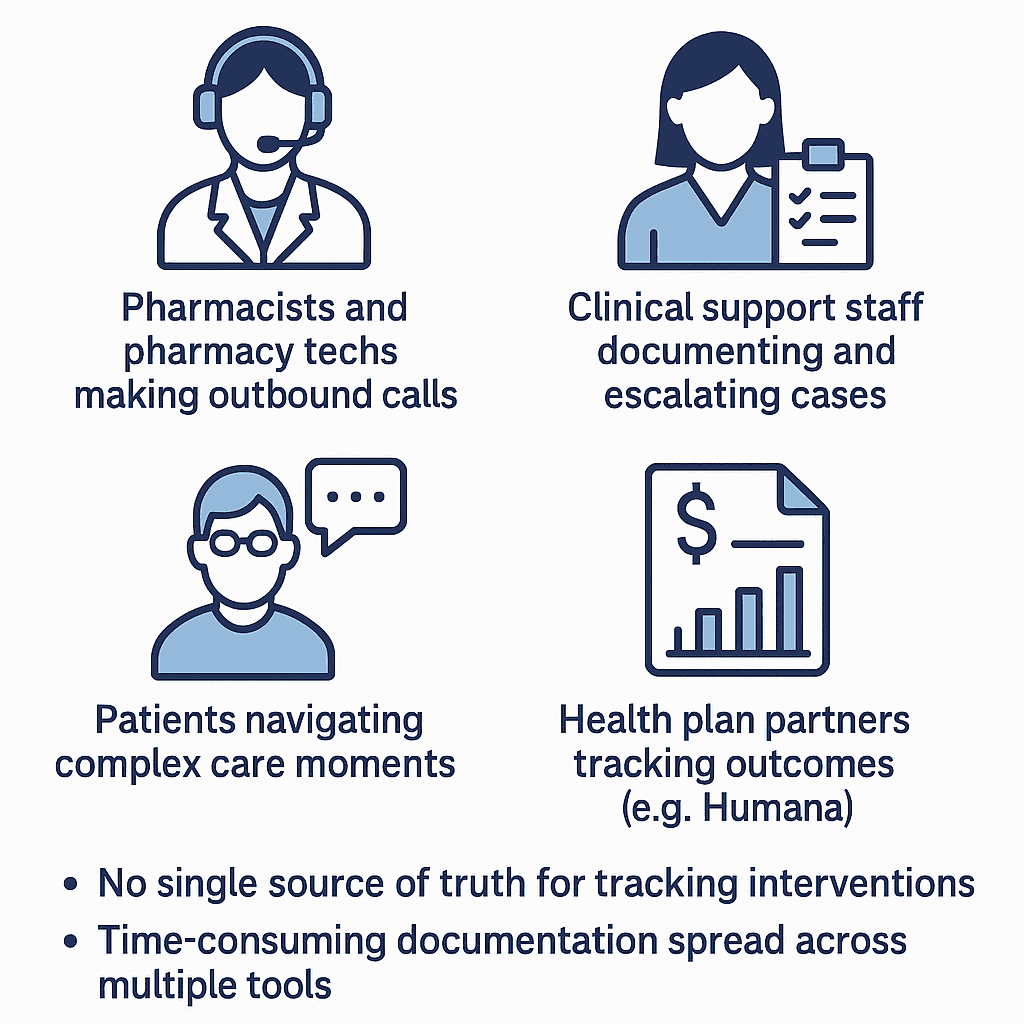
User interviews and shadowing sessions with our internal team of clinical pharmacists surfaced three problems:
- No single source of truth for a member’s barrier or its status
- Documentation scattered across notes and tools
- Follow-up and escalation reported inconsistently, if at all
03
Designing for clarity and speed
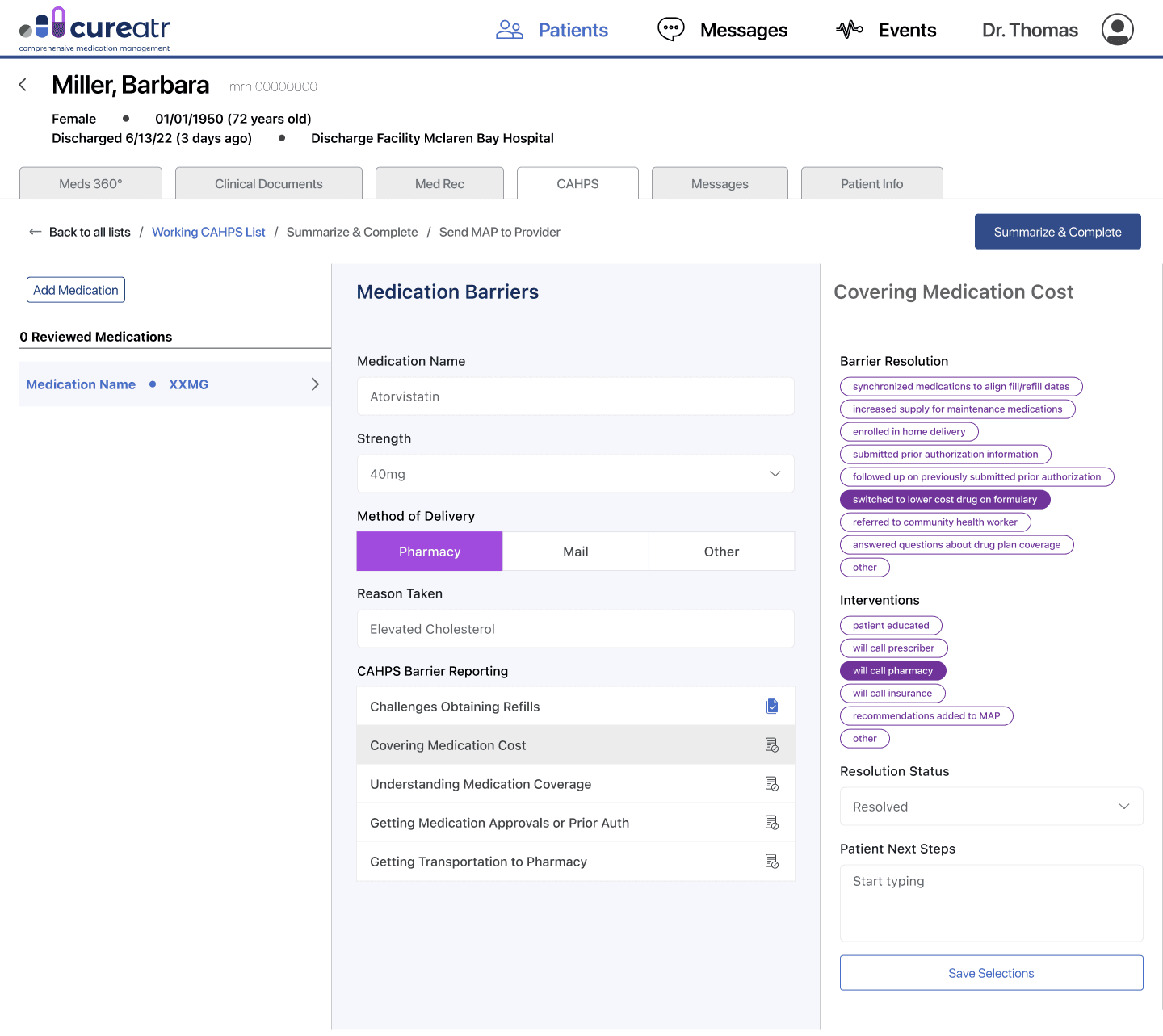
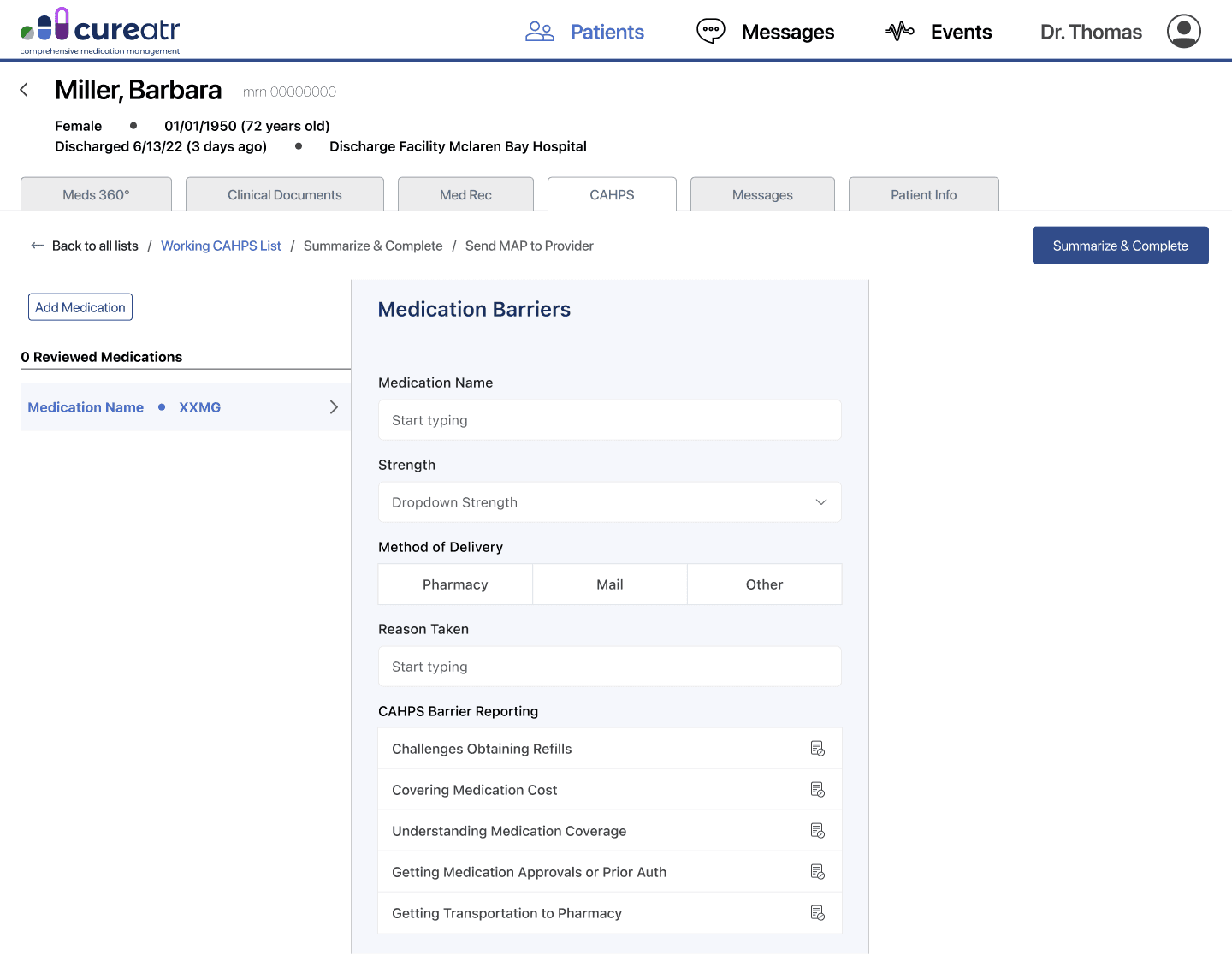
I designed an end-to-end interface built around how a call actually goes:
- A guided conversation that walks the pharmacist toward the root barrier instead of the first one mentioned
- Structured categories for affordability, access and confusion, so barriers became countable
- A resolution tracker with status flags, so nothing waiting on follow-up disappeared
04
Designing past the screens
A workflow only helps if people use it the same way and the plan can see the results. Alongside the interface I delivered training documentation for the pharmacists, an auto-syncing reporting layer, and a stakeholder deck showing the ROI to the health plan.
05
The call that made it real
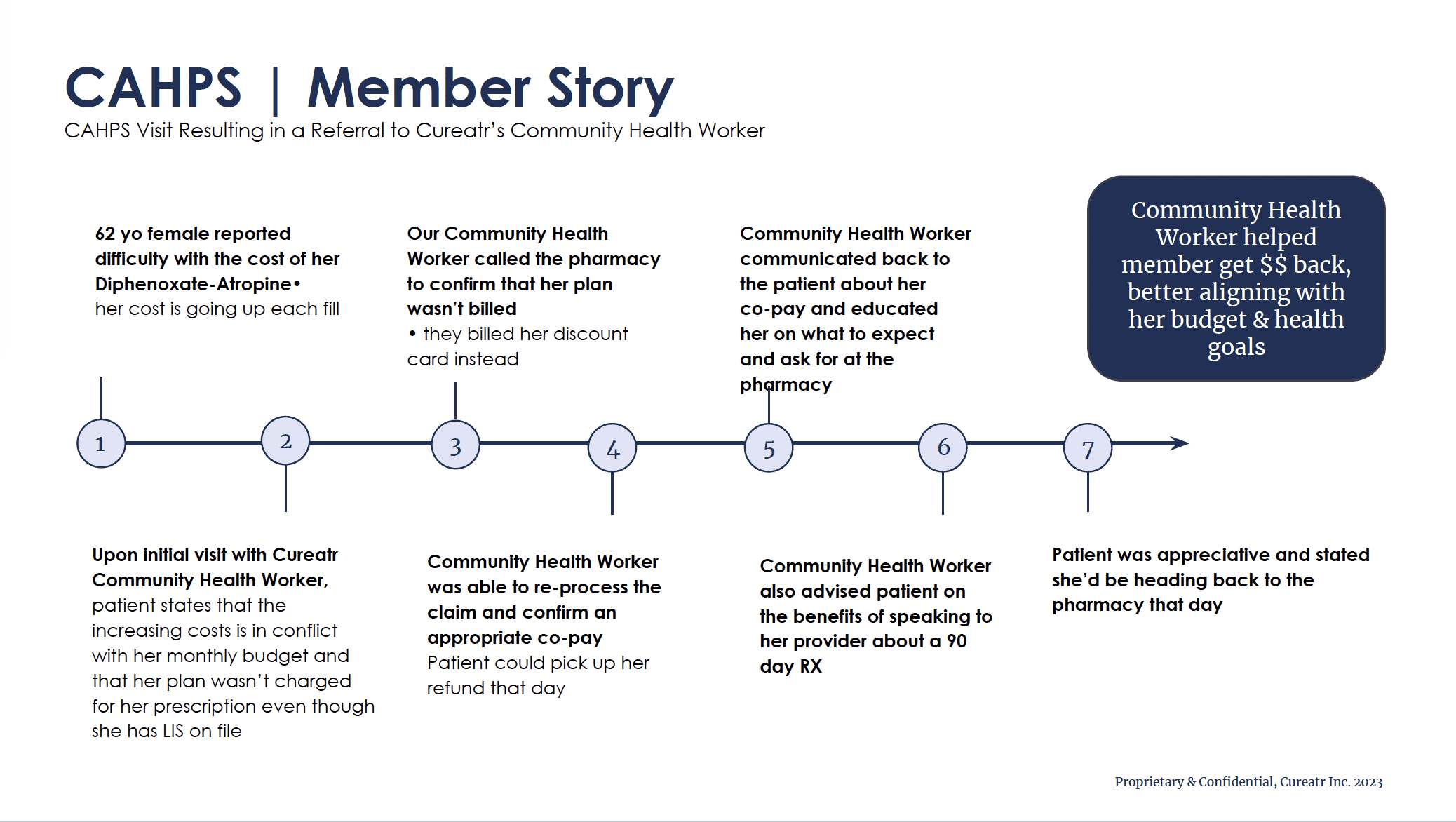
One patient couldn’t afford her prescriptions. Working through the new flow, the pharmacist got her reimbursement and helped her navigate her benefits, on a single call.
“Our patient was thanking me at the end of the call, that she’d now get her refill by the end of the day.”
— Clinical pharmacist
06
Results
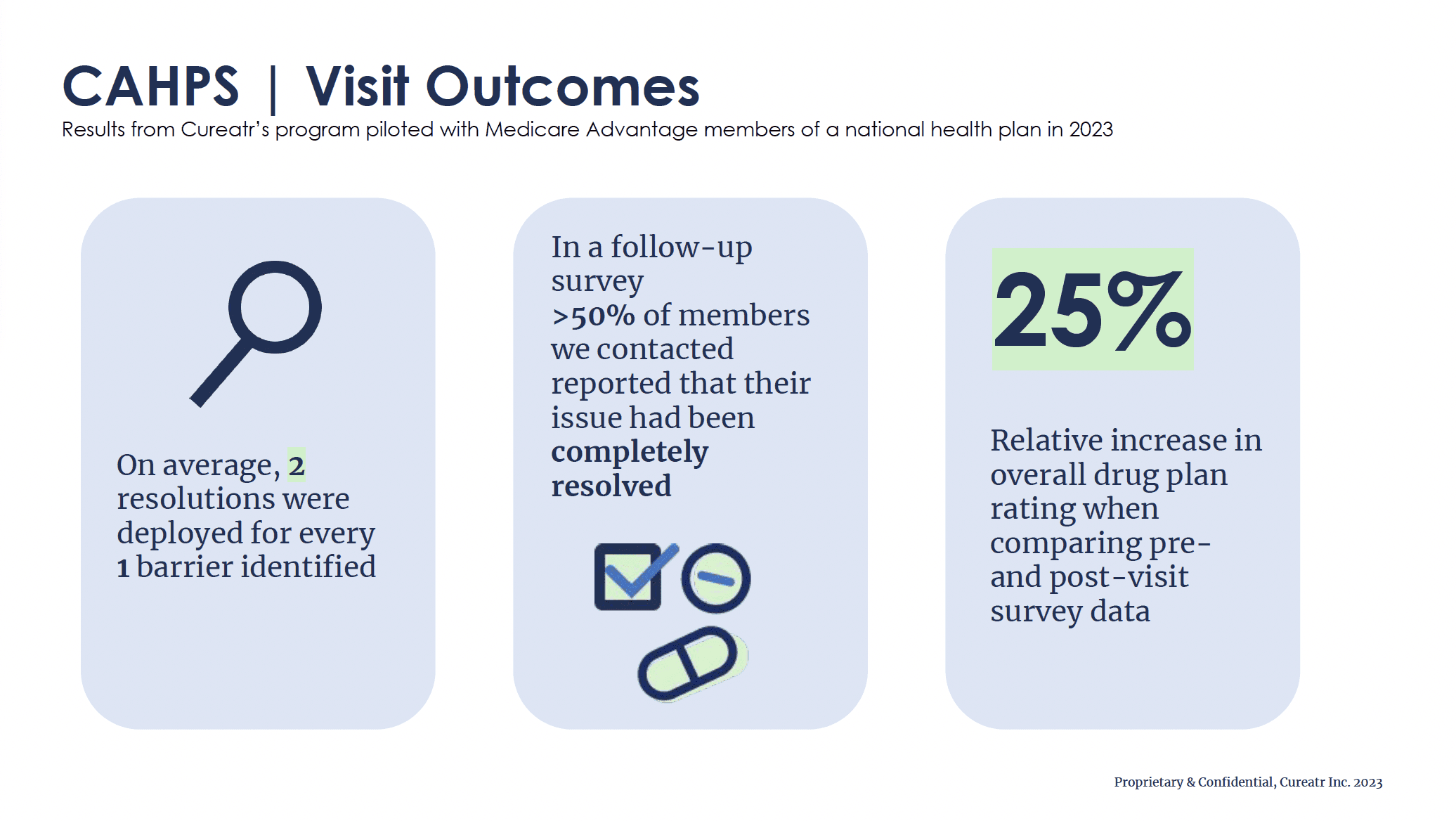
25%
increase in drug plan satisfaction, pre- vs post-survey
50%
of patients reported their issue completely resolved
1.9
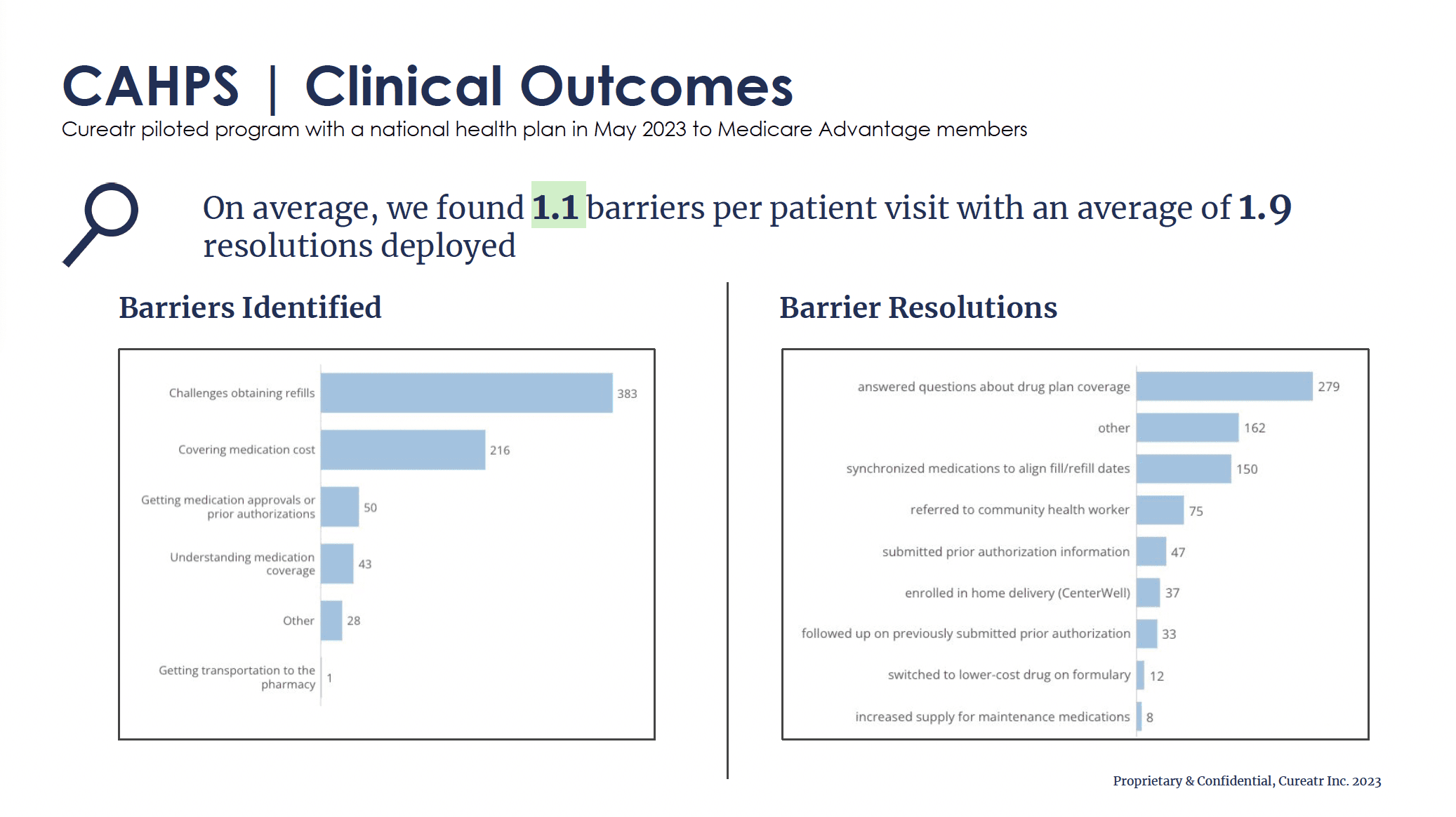
resolutions deployed per visit, against 1.1 barriers found
Structured categories turned anecdotes into data the plan could act on. Refill challenges (383 cases) and medication cost (216) were the most common barriers; drug coverage education (279) and refill date synchronization (150) were the most-used fixes.

07
What I took from it
Design the reporting with the workflow, not after it. The categories that made each call faster were the same ones that let the plan see what was working. One structure served the clinician and the buyer.