CUREATR · CLINICAL DOCUMENTATION · 2021–2023
Building the immunizations checklist so clinicians talk to patients, not text boxes.
Telepharmacists review medications with vulnerable patients after hospital discharge, and record vaccine histories along the way. Free-text entry made that data inconsistent and unusable. I replaced it with a structured checklist that saved more than three minutes per call.
- Role
- Product designer
- Users
- Telepharmacists on post-discharge calls
- Research
- 5 interviews · 10 shadowing sessions
- Timeline
- Cureatr, 2021–2023
- Outcome
- 3+ minutes saved per call
01
Free text was costing everyone
Clinical teams typed vaccine histories into free-text fields. Every clinician wrote them differently, so the data couldn’t be counted, compared or trusted, and the time spent typing came out of time spent with the patient.
02
Watching the work
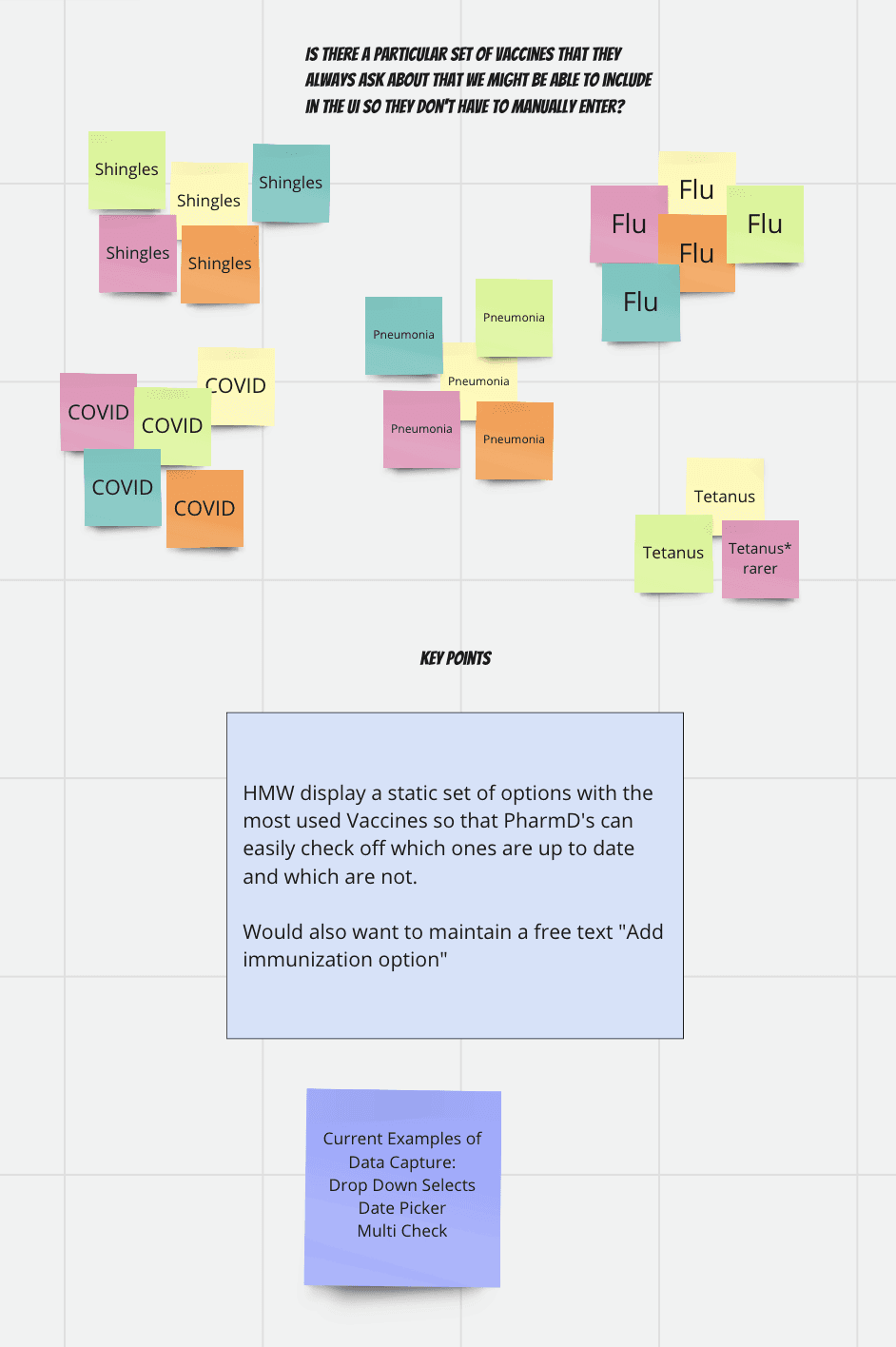
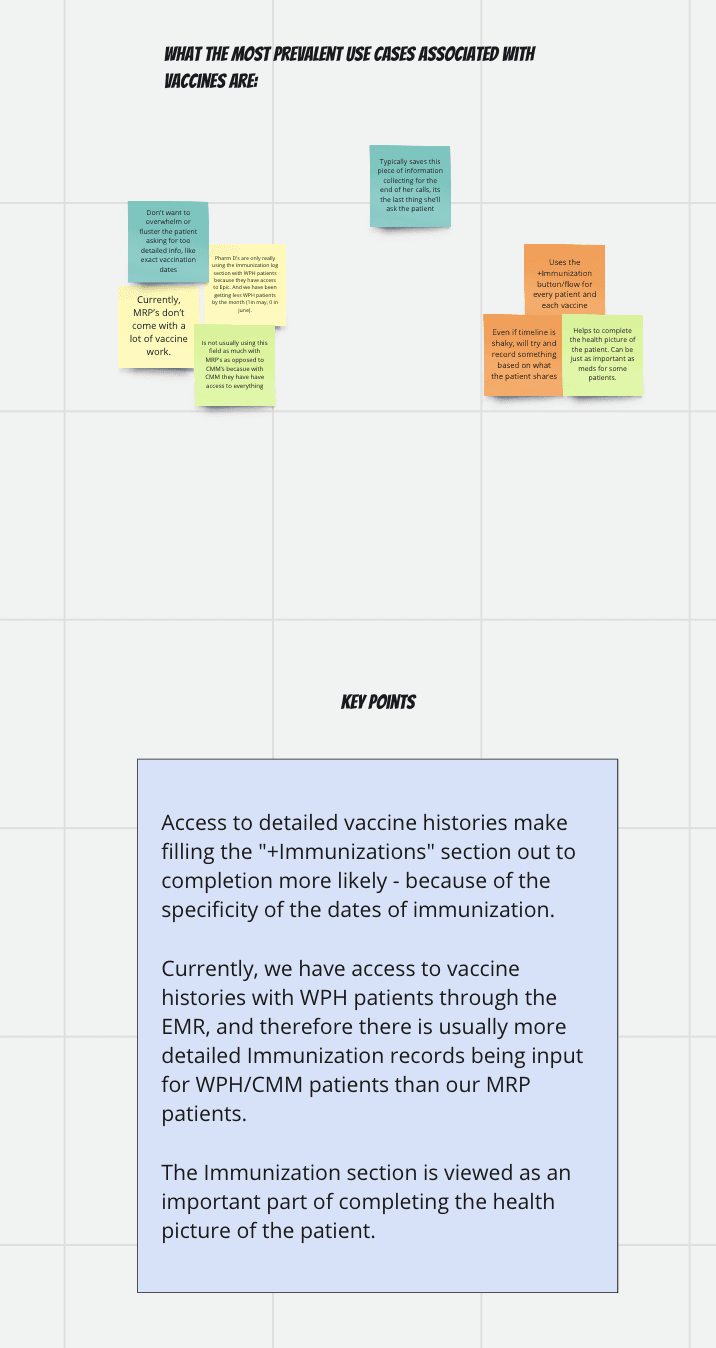
I ran 5 in-depth interviews and 10 shadowing sessions with the clinical team. Two findings decided the design:
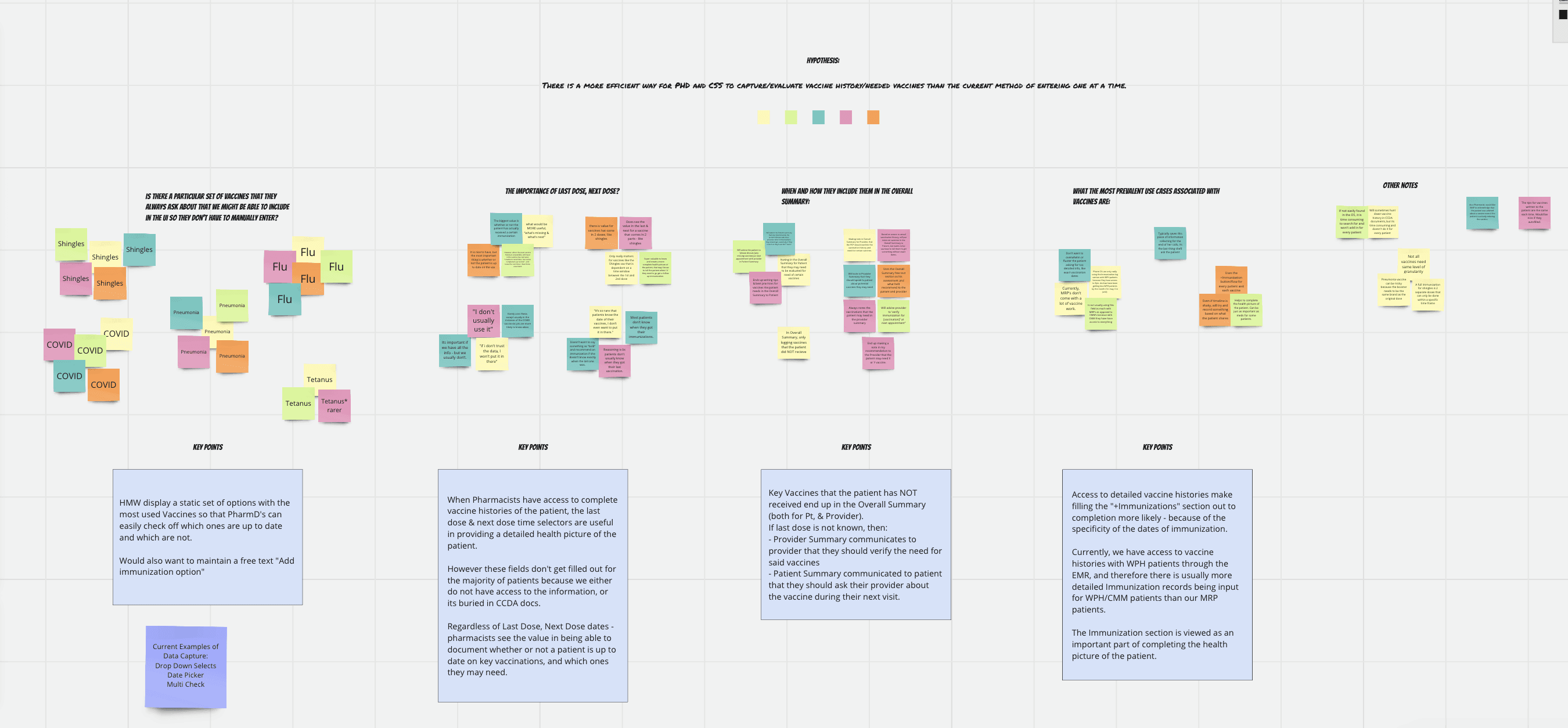
- Most patients had the same top five immunizations
- Free text produced typos that the data team then had to clean up by hand
03
Designing for speed and structure
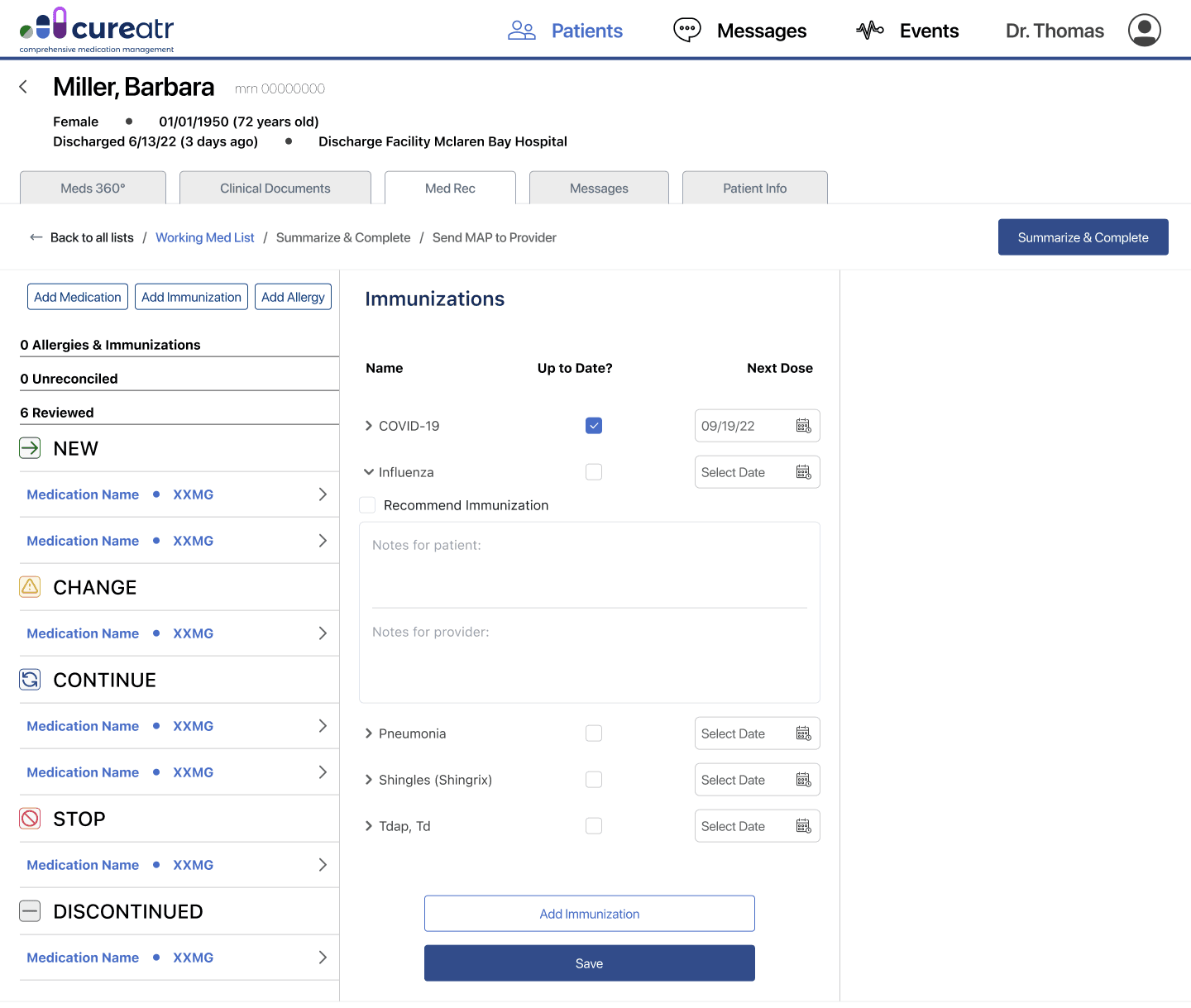
- Pre-built checkboxes for the top five immunizations
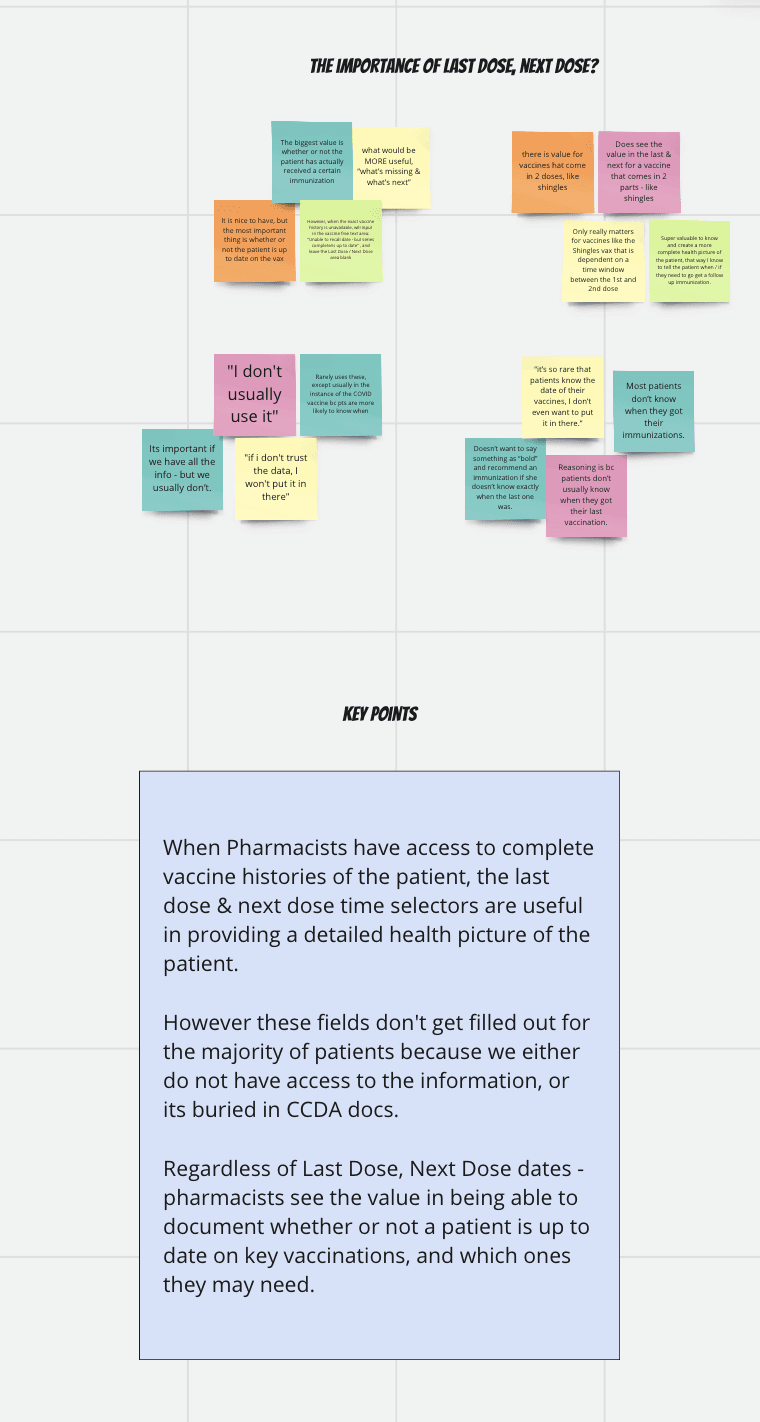
- Date selectors for doses given or next due
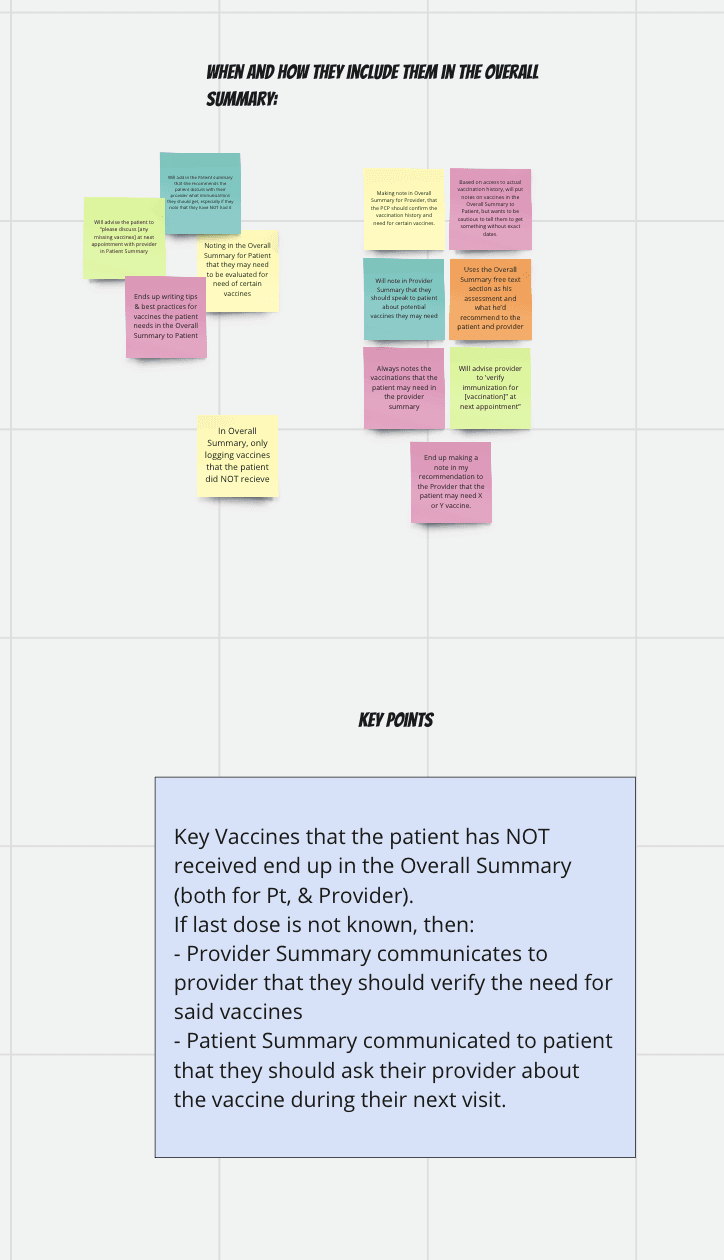
- A notes field for the nuance a checkbox can’t hold
- Add another for anything not on the list
04
Making the case for checkboxes
Free text felt flexible, and there was pushback on constraining clinicians. I argued for a checkbox-first design and won stakeholder buy-in with the research: if most patients share the same five immunizations, structure is faster for the common case, and the notes field keeps room for the rest.
05
Results
3+ min
saved on note-taking per call
1
standardized format for vaccine data
More
time spent with the patient instead of the keyboard
06
What I took from it
Shadowing beats asking. Clinicians described their documentation as varied; watching them showed it was mostly the same five entries. The structure was already there in the work.